

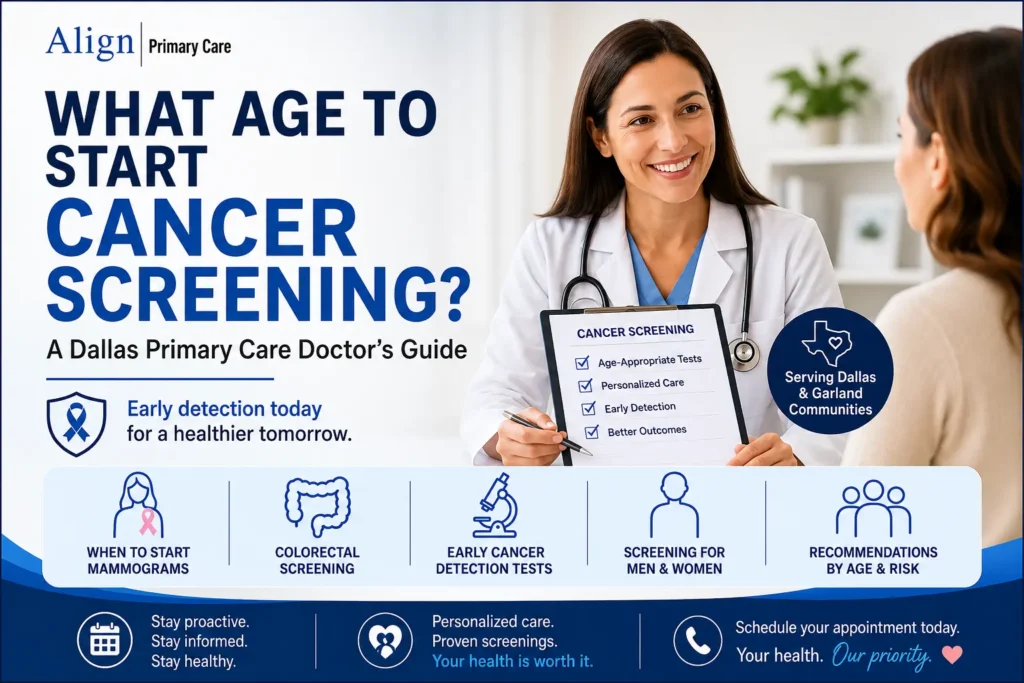
What Age to Start Cancer Screening? Understanding Why Timing Matters
One of the most common questions primary care providers hear is, "What age to start cancer screening?" While many people assume cancer screening begins after turning 50, today's medical guidelines tell a different story. Advances in medical research, changes in cancer incidence among younger adults, and improvements in early detection technologies have led healthcare organizations to update several screening recommendations over the past few years.
The reality is that there isn't a single age that applies to everyone. Your ideal screening schedule depends on several factors, including your age, biological sex, family history, genetics, lifestyle habits, existing medical conditions, and personal risk factors. For some individuals, screening begins as early as age 21, while others may need additional tests well before age 45 because of inherited cancer syndromes or other high-risk conditions.
At Align Primary Care, we believe prevention is one of the most powerful tools in modern healthcare. Through personalized preventive care and evidence-based screening recommendations, our goal is to detect potential health concerns before they become life-threatening. Early diagnosis often means less invasive treatment, improved survival rates, lower healthcare costs, and significantly better long-term outcomes.
For residents throughout Dallas and Garland, staying current with cancer screening recommendations has never been more important. According to recent data from the American Cancer Society, certain cancers including colorectal, breast, and some gastrointestinal cancers are being diagnosed more frequently in adults younger than previous generations. These trends have prompted medical organizations to reconsider when routine screening should begin for many individuals.
If you've been wondering whether you're too young or perhaps overdue for cancer screening, this guide explains the latest recommendations and how a personalized screening plan can help protect your health for years to come.
Why Early Cancer Detection Saves Lives
Cancer rarely develops overnight. In many cases, abnormal cells grow slowly over several years before causing symptoms. This creates an important window of opportunity where screening tests can identify precancerous changes or detect cancer during its earliest and most treatable stages.
Unlike diagnostic tests performed after symptoms appear, screening is intended for people who feel healthy. The goal is simple: find disease before it causes problems.
Early cancer detection offers several significant advantages:
- Treatment is often less aggressive. Smaller tumors usually require less extensive surgery and may avoid chemotherapy or radiation altogether.
- Survival rates improve dramatically. Many cancers detected at Stage I have five-year survival rates exceeding 90%, compared with much lower survival rates when diagnosed after spreading.
- Healthcare costs are generally lower. Preventing advanced disease reduces hospitalization, complex treatments, and long recovery periods.
- Quality of life is preserved. Patients diagnosed early frequently return to normal activities much sooner than those requiring extensive cancer treatment.
Primary care physicians play an essential role in this process. Rather than recommending identical screening schedules for every patient, they evaluate personal and family medical histories, lifestyle factors, tobacco exposure, occupational risks, previous illnesses, and current health conditions to create individualized prevention plans.
This personalized approach has become increasingly important because no two patients share exactly the same cancer risk profile.
Why Cancer Screening Recommendations Have Changed
Medical guidelines continue evolving because researchers constantly analyze new evidence. During the past decade, several important discoveries have changed how physicians approach cancer prevention.
Researchers have observed a concerning increase in several cancers among adults under age 50. While experts continue investigating the exact causes, several contributing factors appear to include obesity, sedentary lifestyles, processed diets, environmental exposures, chronic inflammation, and metabolic diseases such as diabetes.
Because of these findings, organizations including the American Cancer Society and the U.S. Preventive Services Task Force have revised multiple recommendations, particularly for colorectal cancer screening.
Today's approach emphasizes risk-based screening rather than relying solely on age. Someone with a strong family history of colon cancer, breast cancer, or inherited genetic mutations may need screening years or even decades earlier than average-risk adults.
Similarly, individuals who smoke, have chronic viral infections, or have certain long-term medical conditions may require additional surveillance beyond standard recommendations.
This shift represents one of the biggest trends in preventive medicine: moving away from a "one-size-fits-all" model toward personalized healthcare.
Cancer Screening Recommendations by Age
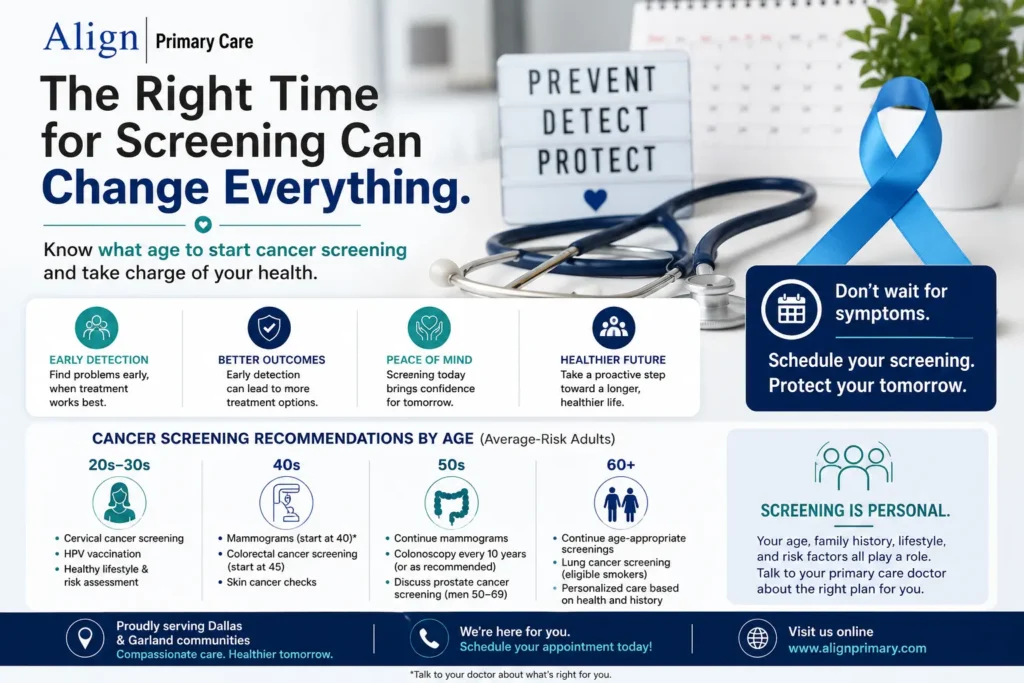
Understanding cancer screening recommendations by age helps you prepare for each stage of adulthood. The following overview reflects current evidence-based guidance for average-risk adults, though your physician may recommend earlier testing depending on your medical history.
Ages 20–29: Building a Foundation for Lifelong Prevention
Many young adults mistakenly believe cancer screening is unnecessary before age 30. While most cancers remain uncommon during this decade, preventive healthcare should begin early.
Women generally begin cervical cancer screening in their early twenties, even when no symptoms are present. Regular visits also provide opportunities to discuss HPV vaccination, reproductive health, family history, and lifestyle habits that influence future cancer risk.
Young adults should also establish healthy behaviors that reduce lifetime cancer risk, including maintaining a healthy weight, exercising regularly, limiting alcohol consumption, avoiding tobacco products, and protecting skin from excessive ultraviolet exposure.
Perhaps most importantly, this is the decade to establish a relationship with a trusted primary care physician who can monitor changing health risks over time.
Ages 30–39: Risk Assessment Becomes More Important
Although routine screening remains relatively limited for average-risk adults during their thirties, physicians begin paying closer attention to individual risk factors.
During this decade, providers review:
- Family history of breast, colorectal, ovarian, prostate, and other cancers
- Smoking history
- Alcohol consumption
- Body weight
- Physical activity
- Occupational exposures
- Previous abnormal screening results
- Chronic medical conditions
Patients with inherited cancer syndromes or strong family histories may begin breast imaging, colonoscopy, or other specialized screening earlier than standard recommendations.
Women continue routine cervical cancer screening, while discussions about future breast cancer screening often begin toward the end of this decade.
For both men and women, annual wellness visits become increasingly valuable because many lifestyle-related conditions including obesity, diabetes, hypertension, and chronic inflammation can influence long-term cancer risk.
Ages 40–49: A Critical Decade for Preventive Care
For many adults, the forties represent one of the most important decades for preventive healthcare. This is when several routine screening tests begin, and healthcare providers carefully reassess overall cancer risk.
One of the most frequently asked questions during this stage is when to start mammograms.
Current recommendations generally advise that women at average risk begin regular mammography around age 40, although the exact timing and screening interval should be determined through shared decision-making with a healthcare provider. Women with a strong family history of breast cancer, inherited BRCA mutations, or other significant risk factors may require earlier imaging, supplemental breast MRI, or more frequent surveillance.
Breast cancer remains one of the most common cancers among women, making routine mammography one of the most effective early cancer detection tests available today. Detecting breast cancer before symptoms develop can substantially improve treatment options and long-term survival.
For adults approaching age 45, discussions about colorectal cancer screening also become increasingly important. In response to rising colorectal cancer rates among younger adults, many organizations now recommend beginning routine screening at age 45 for individuals at average risk. Screening options may include colonoscopy, stool-based tests, or other approved methods depending on personal preferences and medical history.
This decade is also an excellent time to review skin health, family history, smoking status, and lifestyle habits with your physician to determine whether additional screenings are appropriate.
For Dallas and Garland residents, scheduling preventive visits during your forties provides an opportunity to create a comprehensive screening roadmap that evolves with your health needs rather than reacting after symptoms appear.
Ages 50–64: The Most Important Years for Routine Cancer Screening
For many adults, ages 50 through 64 represent the period when routine cancer screening becomes a regular part of preventive healthcare. While some screenings begin earlier, this is the decade when maintaining a consistent schedule has the greatest impact on detecting cancer before symptoms appear.
If you're wondering what age to start cancer screening, the answer for many common cancers is that by age 50, nearly every adult should have an individualized screening plan developed with their primary care provider.
Breast Cancer
Women should continue routine mammograms based on their physician's recommendations and individual risk factors. Those with dense breast tissue, a strong family history, or genetic mutations may benefit from additional imaging such as breast MRI.
Early detection remains one of the most effective ways to reduce breast cancer mortality, making mammography one of the most valuable early cancer detection tests available.
Colorectal Cancer
Adults at average risk should continue regular colorectal cancer screening after beginning around age 45. Colonoscopy remains the gold standard because it can both detect cancer and remove precancerous polyps during the same procedure.
Other screening options may include stool-based FIT testing or stool DNA tests, depending on your risk profile and personal preferences. Your physician can help determine which option best fits your health needs.
Cervical Cancer
Women should continue cervical cancer screening according to current medical guidelines. Depending on age and previous results, screening may involve HPV testing, a Pap test, or both.
Prostate Cancer
Men between 50 and 69 should discuss prostate cancer screening with their healthcare provider. Rather than recommending universal screening, today's guidelines emphasize shared decision-making based on family history, race, overall health, and personal preferences.
Lung Cancer
Adults with a significant smoking history may qualify for annual low-dose CT scans to screen for lung cancer. This recommendation generally applies to current smokers and certain former smokers who meet specific age and smoking history criteria.
These recommendations illustrate why cancer screening recommendations by age should always be personalized rather than based solely on generalized online information.
Age 65 and Beyond: Continuing Preventive Care
Many people assume cancer screening stops after retirement, but that isn't always the case.
Instead, physicians evaluate several factors, including:
- Overall health
- Life expectancy
- Previous screening history
- Existing medical conditions
- Functional status
- Patient preferences
Healthy older adults often continue breast, colorectal, and other appropriate screenings because they may still benefit from early diagnosis and treatment.
Conversely, certain screenings may no longer be necessary for individuals with consistently normal prior results or significant health limitations. These decisions should always be made in consultation with a trusted healthcare provider.
High-Risk Individuals May Need Earlier Screening
Age alone does not determine when screening should begin.
Some individuals should start much earlier than average because of elevated risk factors.
These include patients with:
- A first-degree relative diagnosed with cancer at a young age
- BRCA1 or BRCA2 genetic mutations
- Lynch syndrome
- Long-term tobacco use
- Previous cancer diagnosis
- Chronic inflammatory bowel disease
- Obesity
- Type 2 diabetes
- Long-term immunosuppression
- Exposure to occupational carcinogens
Your physician may recommend earlier mammograms, colonoscopies, prostate evaluations, genetic counseling, or additional imaging depending on your personal history.
This individualized approach has become the cornerstone of modern preventive medicine.
How Chronic Conditions Influence Cancer Risk
Modern research continues to demonstrate strong connections between chronic diseases and cancer development.
Conditions including obesity, insulin resistance, diabetes, fatty liver disease, and chronic inflammation can increase the likelihood of developing several types of cancer over time.
Similarly, lifestyle factors such as poor nutrition, physical inactivity, tobacco use, excessive alcohol consumption, and uncontrolled hypertension contribute to overall disease burden.
Managing these conditions doesn't simply improve cardiovascular health it also supports long-term cancer prevention.
Patients who regularly see their primary care provider often receive preventive counseling that addresses nutrition, exercise, smoking cessation, weight management, vaccinations, and appropriate screening schedules during the same visit.
The Latest Trends in Cancer Screening
Cancer screening continues to evolve rapidly, driven by advances in technology and medical research.
Several important trends are shaping preventive care in 2026:
1. More Personalized Screening
Healthcare providers are moving beyond age-based recommendations to incorporate genetics, family history, lifestyle, and environmental exposures into screening decisions.
2. Artificial Intelligence in Imaging
AI-assisted mammography and radiology tools are improving the detection of subtle abnormalities, helping radiologists identify suspicious findings with greater accuracy while reducing unnecessary callbacks.
3. Multi-Cancer Early Detection Research
Researchers continue evaluating blood-based tests capable of identifying signals from multiple cancers using circulating tumor DNA. While these tests show promise, they currently complement rather than replace guideline-recommended screenings.
4. Greater Focus on Younger Adults
The continued rise in early-onset colorectal and other cancers has increased awareness among physicians and patients alike. Healthcare providers are encouraging adults not to ignore symptoms simply because they are "too young."
These developments reinforce the importance of maintaining regular preventive care rather than waiting for symptoms to develop.
Why Cancer Screening Matters for Dallas & Garland Adults
Residents of Dallas and Garland face many of the same health challenges seen throughout the United States, including increasing rates of obesity, diabetes, hypertension, and sedentary lifestyles.
Because these factors may influence long-term cancer risk, routine preventive care becomes even more valuable.
At Align Primary Care, patients receive personalized recommendations based on:
- Current age
- Family history
- Existing health conditions
- Lifestyle habits
- Personal risk factors
- Previous screening history
Instead of following generic online advice, patients receive evidence-based guidance tailored specifically to their health profile.
This individualized approach helps ensure that recommended screenings occur neither too early nor too late.
Conclusion
Understanding what age to start cancer screening is one of the most important decisions you can make for your long-term health. While age-based recommendations provide a valuable starting point, the best screening schedule is one tailored to your unique health profile. Family history, genetics, lifestyle habits, and chronic medical conditions all influence when screening should begin and how frequently it should be repeated.
Whether you're approaching your 40s, already over 50, or have a family history that places you at higher risk, proactive screening offers the opportunity to detect cancer early—often before symptoms appear when treatment is most effective.
At Align Primary Care, our team is committed to helping adults in Dallas and Garland stay ahead of preventable disease through comprehensive preventive care, personalized risk assessments, and evidence-based screening recommendations. By combining routine wellness visits with timely cancer screening, patients can make informed decisions that support healthier, longer lives.
For more preventive health insights, screening recommendations, and wellness resources, visit the Align Primary Care Health Blog.
Frequently Asked Questions
What age should I start cancer screening?
There is no universal answer. Some screenings begin in the early twenties, mammograms often begin around age 40 for average-risk women, colorectal screening generally begins around age 45 for average-risk adults, while other screenings depend on personal risk factors and family history.
When should women start mammograms?
For many women at average risk, discussions about mammography begin around age 40. Women with higher risk factors may require earlier screening or additional imaging. Decisions should be made with a healthcare provider.
What are the most common early cancer detection tests?
Common screening tests include mammograms, colonoscopy, stool-based colorectal tests, Pap tests, HPV testing, low-dose CT scans for eligible smokers, and prostate cancer screening discussions for appropriate patients.
Do healthy adults still need cancer screening?
Yes. Screening is specifically designed for people who feel healthy. Many cancers produce no symptoms during their earliest and most treatable stages.
Can lifestyle reduce cancer risk?
Absolutely. Maintaining a healthy weight, eating a balanced diet, exercising regularly, avoiding tobacco, limiting alcohol, protecting your skin from excessive sun exposure, and staying current with preventive healthcare all contribute to lowering cancer risk.