
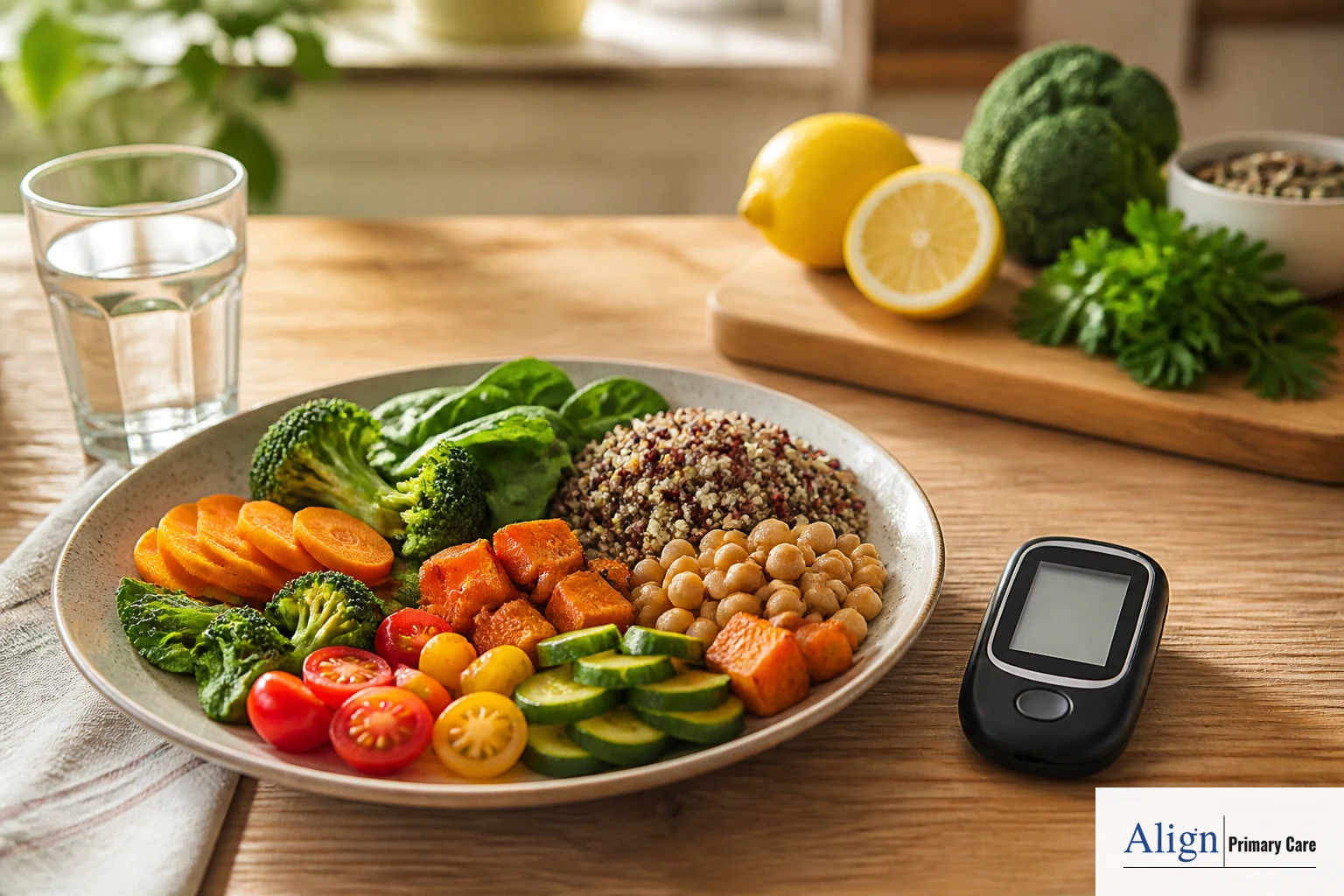
If you've been told your blood sugar is running high or you're already managing prediabetes or type 2 diabetes you're probably asking yourself the same question most of our patients ask us: What can I actually do about it? Not just what medication should I take, but what real changes will move the needle?
That's exactly the right question. Medication absolutely has its place in diabetes management, and our team at Align Primary Care takes a personalized approach to determining when and how it fits into your care plan. But the truth is, the lifestyle choices you make every single day what you eat, how you move, how you sleep, how you handle stress have an enormous impact on your blood sugar levels, often more than people realize.
The science behind natural blood sugar management is solid and well-documented. These aren't wellness trends or social media tips. These are evidence-backed strategies that physicians and researchers have studied in clinical trials, and that we recommend to our patients across Dallas, Garland, Hurst, and Carrollton every week.
Here are 10 of the most effective ways to lower blood sugar naturally explained clearly, with the reasoning behind each one so you understand not just what to do, but why it works.
1. Walk After Every Meal
This is one of the most underrated blood sugar strategies out there, and it costs nothing. A 10 to 15 minute walk within 30 minutes of eating helps your muscles actively absorb glucose from the bloodstream, blunting the post-meal spike that's so damaging over time.
Research published in Diabetes Care found that three short walks after meals were more effective at reducing 24-hour blood glucose levels than one longer walk taken at a different time of day. The reason comes down to muscle metabolism: when you walk, your leg muscles consume glucose directly, without needing insulin to do it. That's a significant advantage for anyone with insulin resistance.
You don't need to power walk or break a sweat. A casual stroll around the block after lunch or dinner is enough to make a real difference, especially when done consistently.
2. Swap Refined Carbs for Whole Food Alternatives
Not all carbohydrates affect blood sugar equally. White bread, white rice, sugary cereals, pastries, and sweetened beverages digest rapidly and flood your bloodstream with glucose fast producing sharp spikes and leaving you hungry again an hour later.
Whole grains, legumes, non-starchy vegetables, and most fruits contain more fiber and have a lower glycemic index, which means they're digested more slowly and produce a gentler, more manageable rise in blood sugar. Swapping white rice for brown rice, choosing whole grain bread over white, or replacing a sugary snack with a handful of almonds and an apple are small changes that compound significantly over weeks and months.
The goal isn't to eliminate carbohydrates it's to choose ones that your body has to work harder to break down.
3. Load Up on Fiber
Fiber is one of the most powerful tools in your blood sugar management toolkit. Soluble fiber the kind found in oats, beans, lentils, flaxseeds, and many fruits and vegetables forms a gel-like substance in your gut that slows the absorption of glucose into your bloodstream. This keeps blood sugar from spiking sharply after meals.
Beyond that, a fiber-rich diet feeds beneficial gut bacteria that produce compounds which improve insulin sensitivity over time. Research consistently shows that people who eat more fiber have better long-term blood sugar control and lower A1C levels.
A practical target is 25 to 35 grams of fiber per day. Adding a cup of lentil soup at lunch, a side of roasted vegetables at dinner, and a piece of fruit as a snack gets you most of the way there without dramatic dietary changes.
4. Drink More Water Especially Instead of Sugary Drinks
Dehydration has a direct effect on blood sugar levels. When your body doesn't have enough fluid, your blood becomes more concentrated meaning the same amount of glucose is now dissolved in less liquid, which raises your measured blood sugar. Your kidneys also work less efficiently at filtering out excess glucose when you're dehydrated.
On top of that, many people don't realize that fruit juices, sports drinks, sweetened teas, and flavored coffees can spike blood sugar nearly as sharply as soda. Replacing these with water, sparkling water, or unsweetened herbal tea is one of the simplest and most impactful swaps you can make.
Aim for at least 8 glasses of water per day. If you're active or it's hot outside and summers in Dallas definitely count you need more.
5. Take Stress Management Seriously
This one surprises a lot of patients. Stress isn't just mentally exhausting it has a direct, measurable effect on blood sugar. When you're stressed, your body releases cortisol and adrenaline. These hormones signal your liver to release stored glucose into the bloodstream to give you energy for a "fight or flight" response even if you haven't eaten anything.
For people with diabetes or prediabetes, chronic stress can make blood sugar consistently harder to manage. We've seen patients track perfectly with diet and exercise, then have their numbers jump during a particularly stressful work period or family situation and it's not their fault. Stress hormones are powerful.
Practical stress management strategies include: daily movement (even a short walk), diaphragmatic breathing exercises, mindfulness or meditation, and protecting boundaries around work and sleep. If stress feels overwhelming, speaking with a mental health professional is a legitimate part of diabetes care.
6. Protect Your Sleep
Sleep and blood sugar are deeply connected in ways that many patients don't appreciate until they start tracking both. Poor sleep, whether it's not enough hours or fragmented, low-quality sleep, disrupts insulin sensitivity rapidly. Studies show that even one or two nights of sleeping less than six hours can reduce insulin sensitivity the following day by a significant margin.
Sleep deprivation also increases cortisol, triggers cravings for high-carb foods, and reduces willpower making every other strategy on this list harder to stick to. It's a compounding problem.
Aim for 7 to 8 hours of quality sleep per night. If you're consistently sleeping poorly despite good sleep habits, it's worth discussing with your primary care doctor. Conditions like sleep apnea are extremely common in people with type 2 diabetes and can make blood sugar management very difficult if left untreated.
7. Build Muscle with Strength Training
Aerobic exercise like walking and cycling is valuable, but don't overlook strength training. Muscle tissue is one of the primary sites in your body where glucose gets stored as glycogen and used for energy. The more lean muscle mass you have, the greater your body's capacity to pull glucose out of the bloodstream — and the more insulin-sensitive those muscles tend to be.
Multiple studies have shown that resistance training even two sessions per week meaningfully improves both fasting blood glucose and A1C levels in people with type 2 diabetes. The improvements show up independent of weight loss, meaning the muscle activity itself is driving better glucose metabolism.
You don't need a gym membership to start. Bodyweight squats, push-ups, lunges, and resistance band exercises done at home are enough to build the metabolic benefits. Consistency matters more than intensity, especially in the beginning.
8. Practice Mindful Portion Control
Even a genuinely healthy meal can push blood sugar higher than ideal if you eat too much of it at once. Your body can only process so much glucose at a time large portions of carbohydrate-rich foods, even good ones, can overwhelm your insulin response.
The plate method is a simple framework many of our patients find useful: fill half your plate with non-starchy vegetables, one quarter with lean protein, and one quarter with a whole grain or starchy vegetable. This naturally limits carbohydrate portions without requiring calorie counting.
Slowing down while eating also helps it takes about 20 minutes for your brain to receive satiety signals from your stomach. Eating quickly often means eating more than you actually need. Putting your fork down between bites and pausing mid-meal to check in with your hunger level are habits that sound small but genuinely add up.
9. Consider Apple Cider Vinegar Before High-Carb Meals
Apple cider vinegar gets a lot of hype in wellness circles, but there's actually legitimate research behind this specific application. Several small clinical studies have found that consuming 1 to 2 tablespoons of apple cider vinegar diluted in a glass of water before a high-carbohydrate meal can reduce the post-meal blood sugar spike by a meaningful amount.
The mechanism involves acetic acid, which appears to slow the activity of enzymes that break down starches in the gut. This slows glucose absorption and blunts the spike. The effect is more pronounced when taken before a meal rather than after.
This is not a replacement for medical treatment, and it won't work miracles. But it's a low-cost, low-risk addition to your routine if you want an extra tool. Important note: never drink apple cider vinegar undiluted, as it can damage tooth enamel and irritate your esophagus.
10. Track Your Numbers and Partner with Your Doctor
All the strategies above work best when you can actually see what's working for your body. Home glucose monitoring gives you real-time feedback on how specific foods, exercise sessions, sleep quality, and stress levels affect your blood sugar turning abstract recommendations into concrete, personalized insight.
Beyond home monitoring, working with a primary care provider means your efforts are guided by your actual lab values A1C, fasting glucose, and other metabolic markers not just how you feel. We can identify what's moving in the right direction, catch early warning signs before they become problems, and adjust your care plan as needed.
For patients across the Dallas area managing prediabetes or type 2 diabetes, our team offers personalized that combines medical management with real-world lifestyle guidance because both matter, and they work better together.
Conclusion: You Have More Control Than You Think
Managing blood sugar naturally isn't about perfection it's about consistency. You don't have to do all 10 of these things simultaneously. Start with two or three that feel manageable, build them into your routine, and layer in more over time. Most of our patients are surprised by how much movement they see in their numbers within just a few weeks of making targeted changes.
It's also worth remembering that natural strategies and medical treatment aren't in opposition. For many patients, lifestyle improvements reduce the amount of medication needed over time, or delay the need for medication altogether. But that's a conversation to have with your doctor not something to decide on your own by stopping or changing prescribed treatments.
The bottom line: your daily habits are incredibly powerful. Walking after dinner, choosing whole grains, sleeping 7 to 8 hours, managing stress, and staying hydrated aren't just "nice-to-haves" they're clinical interventions supported by real evidence. And they're available to you starting today.
At Align Primary Care, we're here to support you every step of the way with same-day appointments, compassionate providers, and personalized care plans built around your life. Whether you're newly diagnosed, managing a long-standing condition, or just trying to stay ahead of your numbers, we'd love to be your partner in health.
Ready to take control of your blood sugar? Schedule an appointment at Align Primary Care today with same-day availability and locations across Dallas, Garland, Hurst, and Carrollton, getting personalized support has never been easier. Call or text your nearest location, or book online at alignprimary.com.
Finding the Right Primary Care Doctor
Not all clinics are created equal. You want a provider who accepts your insurance, has convenient hours, multiple locations, and treats you like a person not a number on a chart.
Align Primary Care has multiple DFW locations including Dallas, Garland, Hurst, and Carrollton. They accept most major insurance including Medicare, and they offer a wide range of services from diabetes management services all under one roof.
Frequently Asked Questions
How quickly can I lower blood sugar naturally?
Some strategies work within hours—a post-meal walk, for example, can noticeably reduce your blood sugar spike the same day you try it. Others, like improving your diet, building muscle, and better sleep habits, produce more gradual results that show up in your A1C over 3 to 6 months. Most patients who make consistent lifestyle changes start seeing measurable improvement in fasting blood sugar within 2 to 4 weeks.
What foods lower blood sugar quickly?
No single food dramatically lowers blood sugar on its own, but several foods help prevent spikes and support stable levels: leafy greens, broccoli, cauliflower, avocado, nuts, seeds, fatty fish, eggs, and legumes like lentils and black beans. Cinnamon and berberine (a plant compound) have some evidence behind them as well. The bigger picture is your overall dietary pattern—a whole-foods, fiber-rich diet is far more impactful than any one "superfood."
Can I reverse prediabetes naturally?
Yes—prediabetes is largely reversible with lifestyle changes, and the evidence on this is strong. The CDC's National Diabetes Prevention Program has demonstrated that modest weight loss (5 to 7% of body weight) combined with 150 minutes of physical activity per week can reduce the risk of progressing from prediabetes to type 2 diabetes by more than 58%. The key word is early—the sooner you act after a prediabetes diagnosis, the better your chances of bringing your numbers back into the normal range. Talk to your primary care doctor about getting a personalized plan in place.
Is it safe to manage blood sugar without medication?
For some people—particularly those with mildly elevated blood sugar or early prediabetes—lifestyle changes alone may be sufficient. For others, medication is an important and necessary part of treatment, and stopping or avoiding it without medical guidance can be dangerous. The right approach depends entirely on your individual numbers, health history, and how your body responds to lifestyle changes. This decision should always be made in partnership with your doctor, not independently.
How often should I check my blood sugar at home?
It depends on your situation. People on insulin typically need to check multiple times per day. Those managing blood sugar with lifestyle changes or oral medications may check fasting blood sugar in the morning and occasionally 2 hours after meals to see how specific foods affect them. Your primary care provider will give you a monitoring schedule based on your specific treatment plan. If you don't currently have a home glucometer and think you might benefit from one, ask your doctor about a referral and whether your insurance covers the device and strips.
Does Align Primary Care accept new patients for diabetes management?
Yes! Align Primary Care is actively accepting new patients at all of our locations—Dallas, Garland, Hurst, and Carrollton. We accept most major insurance plans including Medicare, Medicaid, Medicare Advantage, commercial plans, and marketplace plans. We also offer affordable self-pay rates. Same-day appointments are available, so you don't have to wait weeks to get started. Visit alignprimary.com or call your nearest location to schedule.
Some strategies work within hours a post-meal walk, for example, can noticeably reduce your blood sugar spike the same day you try it. Others, like improving your diet, building muscle, and better sleep habits, produce more gradual results that show up in your A1C over 3 to 6 months. Most patients who make consistent lifestyle changes start seeing measurable improvement in fasting blood sugar within 2 to 4 weeks.
No single food dramatically lowers blood sugar on its own, but several foods help prevent spikes and support stable levels: leafy greens, broccoli, cauliflower, avocado, nuts, seeds, fatty fish, eggs, and legumes like lentils and black beans. Cinnamon and berberine (a plant compound) have some evidence behind them as well. The bigger picture is your overall dietary pattern a whole-foods, fiber-rich diet is far more impactful than any one “superfood.”
Yes prediabetes is largely reversible with lifestyle changes, and the evidence on this is strong. The CDC’s National Diabetes Prevention Program has demonstrated that modest weight loss (5 to 7% of body weight) combined with 150 minutes of physical activity per week can reduce the risk of progressing from prediabetes to type 2 diabetes by more than 58%. The key word is early the sooner you act after a prediabetes diagnosis, the better your chances of bringing your numbers back into the normal range. Talk to your primary care doctor about getting a personalized plan in place.
For some people particularly those with mildly elevated blood sugar or early prediabetes lifestyle changes alone may be sufficient. For others, medication is an important and necessary part of treatment, and stopping or avoiding it without medical guidance can be dangerous. The right approach depends entirely on your individual numbers, health history, and how your body responds to lifestyle changes. This decision should always be made in partnership with your doctor, not independently.
It depends on your situation. People on insulin typically need to check multiple times per day. Those managing blood sugar with lifestyle changes or oral medications may check fasting blood sugar in the morning and occasionally 2 hours after meals to see how specific foods affect them. Your primary care provider will give you a monitoring schedule based on your specific treatment plan. If you don’t currently have a home glucometer and think you might benefit from one, ask your doctor about a referral and whether your insurance covers the device and strips.
Yes! Align Primary Care is actively accepting new patients at all of our locations Dallas, Garland, Hurst, and Carrollton. We accept most major insurance plans including Medicare, Medicaid, Medicare Advantage, commercial plans, and marketplace plans. We also offer affordable self-pay rates. Same-day appointments are available, so you don’t have to wait weeks to get started. Visit alignprimary.com or call your nearest location to schedule.